

Best Ways to Keep Coffee Beans Fresh: A 2026 Guide
Table of Contents
- Why Coffee Freshness Declines (And Why It Matters)
- The Four Enemies of Fresh Coffee: Oxygen, Heat, Light, and Moisture
- How Long Do Coffee Beans Stay Fresh? Timelines by Roast Date and Packaging
- What Is the Best Container for Coffee Beans?
- Can You Freeze Coffee Beans? A Step-by-Step Protocol
- Pantry vs. Refrigerator vs. Freezer: Which Storage Method Wins?
- How to Tell If Coffee Beans Are Stale: 5 Sensory Checks
- Putting It All Together: Your Daily Freshness Routine
- Frequently Asked Questions
Last Updated: October 7, 2026
Why Coffee Freshness Declines (And Why It Matters)
The best ways to keep coffee beans fresh start with one habit: buy beans with a recent roast date and protect them from air, heat, light, and moisture.
Here's the problem. Coffee beans begin losing quality the moment they finish roasting.
At Cup of Tranquility, we roast to order for exactly this reason. Beans that sit in a warehouse for months arrive already tired. Beans roasted close to shipping arrive alive.
So why does timing matter so much? Because freshness is not a marketing word. It is a measurable decline, and it starts earlier than most people think.
The Four Enemies of Fresh Coffee: Oxygen, Heat, Light, and Moisture
Four things steal flavor from roasted coffee: oxygen, heat, light, and moisture. Each one works differently, and each one needs its own defense.
Oxygen causes oxidation, the same reaction that turns a sliced apple brown. It breaks down the aromatic oils inside the bean.
Heat speeds up every chemical reaction, including the ones you want to stop.
Light degrades coffee oils, especially direct sunlight.
Moisture is the quiet one. Humidity dulls flavor and can encourage mold. Condensation is the real danger, and it appears whenever cold beans meet warm air.
- Keep beans sealed: blocks oxygen
- Keep them cool: slows the breakdown
- Keep them dark: protects the oils
- Keep them dry: avoids condensation and mold
How Long Do Coffee Beans Stay Fresh? Timelines by Roast Date and Packaging
Whole beans stay fresh for about two to four weeks after the roast date in an opened bag, and up to three months in an unopened, valve-sealed bag.
The roast date is the number that matters. "Best by" dates tell you almost nothing.
| Storage State | Typical Freshness Window | What Changes |
|---|---|---|
| Unopened bag with one-way valve | Up to 3 months | Slow decline, CO2 still protecting beans |
| Opened bag, airtight container | 2-4 weeks | Aroma fades first, then flavor |
| Opened bag, original bag only | 1-2 weeks | Faster oxidation, weaker crema |
| Ground coffee, any container | 3-7 days | Rapid loss of aroma and oils |
| Frozen in small portions | 1-2 months | Minimal loss if sealed and thawed well |
Two things shorten these windows: how the bag is packaged and how often you open it.
Buy in quantities you will finish. If you brew one cup a day, a large bag will go stale before you reach the bottom. Smaller, more frequent orders beat one big stock-up.
What Is the Best Container for Coffee Beans?
The best container for coffee beans is an opaque, airtight canister with a one-way valve, stored in a cool, dark spot. It blocks the four enemies at once and releases trapped gas without letting air back in. But "best" depends on how you brew, so it helps to compare the four container types people actually use.
| Container Type | Light Protection | Oxygen Exposure | Ease of Daily Use | Best For |
|---|---|---|---|---|
| Opaque airtight canister with one-way valve | Excellent | Low, valve vents CO2 without letting air in | High, scoop and reseal in seconds | Daily drinkers keeping beans in the pantry |
| Original bag with one-way valve, folded and clipped | Poor to fair, most bags are opaque, but the fold is not airtight | Moderate, resealing is imperfect | High, no transfer needed | Short-term storage when you finish a bag in 1-2 weeks |
| Vacuum-sealed bag | Excellent if opaque | Very low, most air is removed | Low, requires a sealer and one bag per portion | Long-term freezing and bulk buys |
| Mason jar with tight lid | Poor, clear glass lets light through | Low if the seal is good | High | Pantry storage only if kept inside a dark cupboard |
Here is what to look for in any container:
- Airtight seal: a gasket or clamp lid, not a loose press-on top
- Opaque body: stainless steel or ceramic beats clear glass
- One-way valve: lets CO2 out, keeps oxygen out
- Right size: fill it nearly full so little air remains
- Easy to clean: residual oils from old beans taint new ones
A mason jar with a tight lid works in a pinch. It fails on one count: clear glass lets light through, so keep it in a cupboard. Vacuum-sealed bags are excellent for long storage, less convenient for daily scooping.
One trade-off worth naming: a one-way valve matters most in the first week or two after roasting, when beans are still releasing carbon dioxide. After that, the valve does little, and a simple airtight seal is enough. If you buy beans that were roasted more than three weeks ago, you can skip the valve and prioritize an airtight, opaque body instead.
Can You Freeze Coffee Beans? A Step-by-Step Protocol
Yes, you can freeze coffee beans, and it is one of the most effective ways to keep coffee beans fresh for longer. The catch is doing it properly. Done wrong, freezing adds moisture and stale flavors.
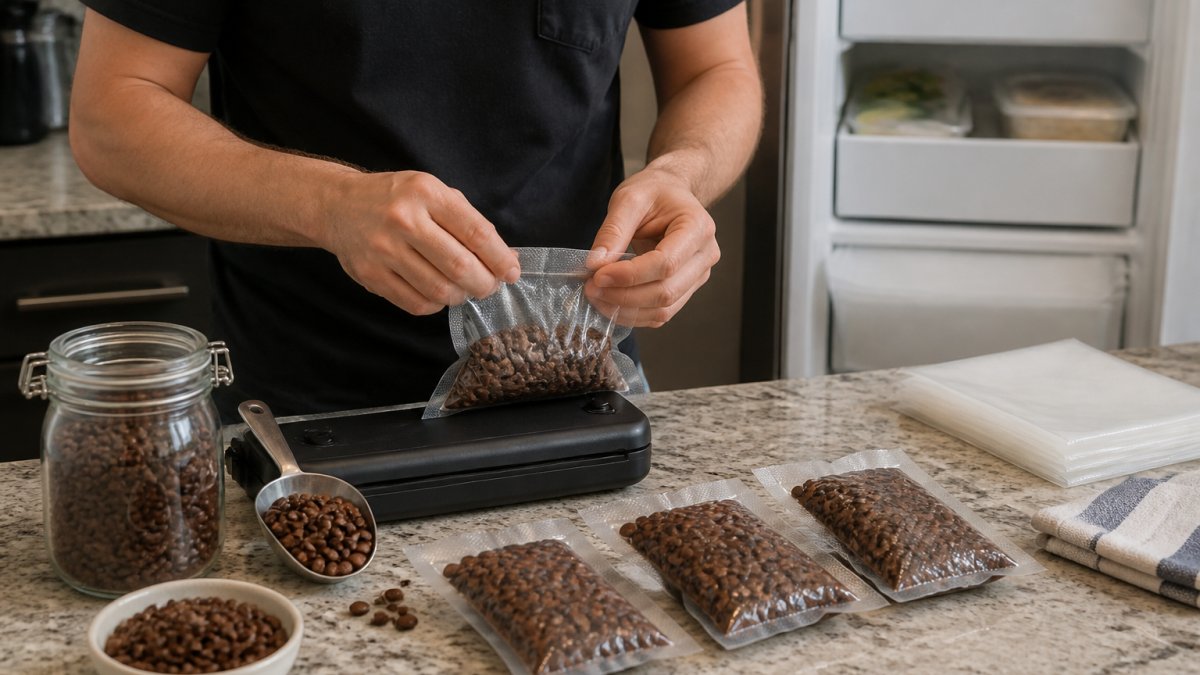
Follow these steps:
- Divide into small portions. Portion out what you use in one week. Smaller portions mean fewer thaw cycles.
- Seal each portion tight. Use a vacuum sealer or a zip bag with the air pressed out.
- Label with the roast date. You will forget which bag is which within a month.
- Freeze immediately. Place portions at the back of the freezer, away from the door.
- Thaw one portion at a time. Move it to the counter and let it reach room temperature before opening.
- Grind after thawing. Grind just before brewing, never before freezing.
- Do not refreeze. Once thawed, use it within a week or two.
The back of the freezer matters. The door swings open and shut all day, and that temperature swing is what damages beans. A steady, cold spot keeps them stable.
Pantry vs. Refrigerator vs. Freezer: Which Storage Method Wins?
The freezer wins for long-term storage, the pantry wins for daily use, and the refrigerator loses on nearly every count.
| Method | Best For | Main Risk | Verdict |
|---|---|---|---|
| Pantry | Beans you finish in 2-4 weeks | Heat and light if stored poorly | Best for daily brewing |
| Refrigerator | Almost nothing | Moisture, odors, temperature swings | Avoid |
| Freezer | Long-term storage, bulk buys | Condensation if thawed wrong | Best for stockpiling |
The fridge combines the worst traits. It is humid, it holds strong food odors that coffee absorbs, and every open of the door shifts the temperature.
The pantry works when you keep it cool, dark, and dry, away from the stove and kettle.
So which should you choose? It depends on how you drink.
- Daily drinkers (one or more cups a day): Keep a week's worth in an opaque airtight canister in the pantry. Buy bags you will finish in two to four weeks. Skip the freezer entirely unless you are stocking up.
- Occasional drinkers (a few cups a week): Buy small bags, or split a larger bag into weekly portions and freeze what you will not use within two weeks. The pantry alone will let beans go stale before you finish them.
- Bulk buyers (buying a month or more at once): Freeze everything except the portion you will use in the next week. Portion into weekly bags before freezing so you never thaw more than you need.
- Multiple-bag households (several roasts open at once): Keep each roast in its own small canister, and freeze the ones you are not actively drinking. Label every container with the roast date so you rotate oldest-first.
Many households do both pantry and freezer storage, and that is the smart setup. The rule of thumb: if you will finish the beans within a month, the pantry is fine.
How to Tell If Coffee Beans Are Stale: 5 Sensory Checks
You can tell if coffee beans are stale by smell, touch, sound, and taste. Stale beans lose their aroma first, long before the flavor fades. Here are five quick checks.
- Smell the bag. Fresh beans hit you with a strong, sweet scent. Stale beans smell like cardboard or nothing at all.
- Squeeze a bean. Fresh roasted beans feel firm and slightly brittle. Soft, spongy beans have taken on moisture.
- Listen for the crack. Good beans snap cleanly when you bite one. A dull thud means they have gone soft.
- Check the oils. A light sheen is normal on darker roasts. A dull, dry surface suggests age.
- Taste a small sip. Flat, bitter, or papery notes mean the oils have broken down.
One more test: watch your brew. Fresh beans bloom, puffing up and bubbling when hot water hits them. If your grounds barely react, the beans have lost most of their gas and much of their flavor.
Putting It All Together: Your Daily Freshness Routine
A simple routine keeps coffee tasting sharp without much effort. The key is consistency, not gear.
- Buy beans with a printed roast date, in amounts you will finish
- Transfer to an airtight, opaque container on day one
- Store it in a cool, dark, dry cupboard, away from heat
- Grind just before brewing, every time
- Freeze extra beans in weekly portions, and thaw fully before opening
- Clean your container between bags to avoid old oil buildup
Grinding just before brewing is the single biggest upgrade for most homes. Ground coffee has far more surface exposed to air, so it stales in days rather than weeks. A burr grinder pays for itself in flavor.
This is where fresh-roasted beans from Cup of Tranquility do the heavy lifting. We roast to order, so beans reach your door close to their peak rather than weeks past it. Our simple ordering and fast, reliable delivery mean you can buy smaller amounts more often, which is exactly how you keep coffee beans fresh.
Frequently Asked Questions
What is the best container to store coffee beans in?
An airtight, opaque container with a one-way valve is ideal. The valve lets carbon dioxide escape without letting oxygen in. Glass or stainless steel work well because they block light. Avoid clear plastic or bags that let light through. Mason jars are a popular choice, but only if stored in a dark cupboard. For best results, keep beans whole and grind just before brewing.
Should you store coffee beans in the fridge or freezer?
The freezer is better than the fridge for long-term storage. The fridge exposes beans to moisture and odors every time you open the door. For freezing, portion beans into small, airtight bags and remove as much air as possible. Thaw a portion at room temperature before grinding. Never refreeze thawed beans. If you use beans within two weeks, the pantry is fine.
How long do coffee beans stay fresh after roasting?
Whole beans peak in flavor between 5 and 20 days after the roast date. After that, they gradually lose aroma and taste. An unopened bag with a one-way valve can stay fresh for up to 3 months. Once opened, aim to use beans within 2 to 4 weeks. Ground coffee stales much faster, often within days. Always check the roast date, not the best-before date.
How can you tell if coffee beans are stale?
Stale beans lose their aroma, taste flat or papery, and may look dull instead of oily. Fresh beans smell sweet and complex. If beans produce little crema when brewed or the flavor feels hollow, they are past their prime. Another sign: beans that have lost their sheen and feel dry. For best results, buy smaller quantities and store them properly to avoid staleness.
Fresh coffee is a timing problem, and most grocery shelves make it worse by stocking beans with no roast date at all. If you want beans that arrive close to their peak, roasted to order and shipped fast, Cup of Tranquility is built for that. Order carefully sourced beans, choose a delivery rhythm that matches how much you brew, and enjoy the difference in your first cup. Get started with Cup of Tranquility and taste what fresh-roasted actually means.